

Guarch R, Cortes JM, Lawrie CH and Lopez JI. Multi-site tumor sampling (MSTS) improves the performance of histological detection of intratumor heterogeneity in clear cell renal cell carcinoma (CCRCC). F1000Research 5: 2020, 2016 [pdf] Current standard-of-care tumor sampling protocols for CCRCC (and other cancers) are not efficient at detecting intratumoural heterogeneity (ITH). We have demonstrated that an alternative protocol, multi-site tumor in silico sampling (MSTS) based upon the divide and […]
Publications
160 posts

Vitronectin and Dermcidin serum levels predict the metastatic progression of AJCC I-II early stage melanoma. Idoia Ortega-Martínez, Jesús Gardeazabal, Asier Erramuzpe, Ana Sanchez-Diez,Jesús M Cortés, María D. García-Vázquez, Gorka Pérez-Yarza, Rosa Izu, Jose Luís Díaz-Ramón, Ildefonso M. de la Fuente, Aintzane Asumendi and María D. Boyano. Int J Cancer 139:1598-607, 2016 [pdf] Like many cancers, an early diagnosis of melanoma is fundamental to ensure a good prognosis, although an important […]

S. Stramaglia, L. Angelini, G. Wu, J.M. Cortes, L. Faes and D. Marinazzo. Synergetic and redundant information flow detected by unnormalized Granger causality: application to resting state fMRI. IEEE Trans Biomed Eng 63: 2518 – 2524, 2016 [pdf] Abstract—Objectives We develop a framework for the analysis of synergy and redundancy in the pattern of information flow between subsystems of a complex network. Methods The presence of redundancy and/or synergy in […]

A divide-and-conquer strategy in tumor sampling enhances detection of intratumor heterogeneity in routine pathology: A modeling approach in clear cell renal cell carcinoma. JI Lopez and JM Cortes. F1000Research 5:385, 2016 [pdf] Intratumor heterogeneity (ITH) is an inherent process in cancer development which follows for most of the cases a branched pattern of evolution, with different cell clones evolving independently in space and time across different areas of the same […]

Ibai Diez, David Drijkoningen, Sebastiano Stramaglia, Paolo Bonifazi, Daniele Marinazzo, Stephan P. Swinnen*, Jesus M. Cortes* (* Equal last-author contribution). Prefrontal brain connectivity re-organization after traumatic axonal injury. 22nd Annual Meeting of the Organization for Human Brain Mapping, OHBM 2016 [pdf] Background. Traumatic axonal injury damages brain structural connectivity which is later compensated by a re-organization in structural-functional circuits in a form which remains inadequately characterized. Methods. We enrolled N=14 […]
I Diez, P Bonifazi, I Escudero, B Mateos, MA Munoz, S Stramaglia, and JM Cortes. The Brain Hierarchical Atlas. 22nd Annual Meeting of the Organization for Human Brain Mapping , OHBM 2016 [pdf] Background. Most used brain atlases are purely anatomical or structural [1-4], and others are purely functional, like the well-known Brodmann atlas based on lesion studies or data-driven methods [5-6]. Although obtaining suitable brain partitions (or atlases) has […]

López JI, Errarte P, Erramuzpe A, Guarch R, Cortés JM, Angulo JC, Pulido R, Irazusta J, Llarena R, Larrinaga G. Fibroblast activation protein predicts prognosis in clear cell renal cell carcinoma. Hum Pathol. 54:100-105, 2016 [pdf] Clear cell renal cell carcinoma is a complex disease with only partial response to therapy and scarce reliable clinical parameters indicative of progression and survival. Fibroblast activation protein expression has been correlated with prognosis […]

L.Zaldumbide, A. Erramuzpe, R. Guarch, R.l Pulido, J.M. Cortes and J.I. Lopez. Snail heterogeneity in clear cell renal cell carcinoma. BMC Cancer 16:194, 2016 [pdf] Background: Intratumor heterogeneity may be responsible of the unpredictable aggressive clinical behavior that some clear cell renal cell carcinomas display. This clinical uncertainty may be caused by insufficient sampling, leaving out of histological analysis foci of high grade tumor areas. Although molecular approaches are providing […]

S. Rodrigues, M. Desroches, M. Krupa, J.M. Cortes, T.J. Sejnowski and A.B. Ali. Time-coded neurotransmitter release at excitatory and inhibitory synapses. Proc Natl Acad Sci USA 113:E1108-15, 2016 [pdf] Communication between neurons at chemical synapses is regulated by hundreds of different proteins that control the release of neurotransmitter that is packaged in vesicles, transported to an active zone, and released when an input spike occurs. Neurotransmitter can also be released […]

Julia M. Kroos, Ibai Diez, Jesus M. Cortes, Sebastiano Stramaglia and Luca Gerardo Giorda. Geometry shapes propagation: assessing the presence and absence of cortical symmetries through a computational model of cortical spreading depression. Frontiers in Computational Neuroscience 10:6, 2016 [pdf] Cortical spreading depression (CSD), a depolarization wave which originates in the visual cortex and travels towards the frontal lobe, has been suggested to be one neural correlate of aura migraine. […]
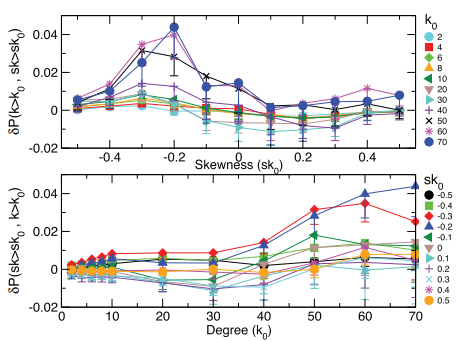
T. A. Amor, R. Russo, I. Diez, P. Mudnal, M. Zirovich, S. Stramaglia, J. M. Cortes, L. de Arcangelis and D. R. Chialvo. Higher order statistics of brain resting activity and its relation with structural connectivity. EPL 111: 68007, 2015. [pdf] The brain exhibits a wide variety of spatiotemporal patterns of neuronal activity recorded using functional magnetic resonance imaging as the so-called blood-oxygenated-level– dependent (BOLD) signal. An active area of […]
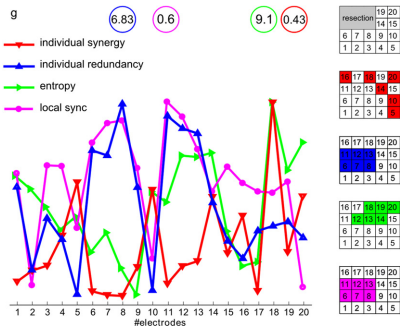
A. Erramuzpe, G.J. Ortega, J. Pastor, R. G. de Sola, D. Marinazzo, S. Stramaglia and J.M. Cortes. Identification of redundant and synergetic circuits in triplets of electrophysiological data. Journal of Neural Engineering 12: 066007 , 2015 [pdf] [arxiv] Objective. Neural systems are comprised of interacting units, and relevant information regarding their function or malfunction can be inferred by analyzing the statistical dependencies between the activity of each unit. Whilst correlations […]

Alonso-Montes, I. Diez, L. Remaki, I. Escudero, B. Mateos, Y. Rosseel, D. Marianazzo, S. Stramaglia, Jesus M Cortes. Lagged and instantaneous dynamical influences related to brain structural connectivity. Frontiers in Psychology 6: 1024, 2015 [pdf] Contemporary neuroimaging methods can shed light on the basis of human neural and cognitive specializations, with important implications for neuroscience and medicine. Indeed, different MRI acquisitions provide different brain networks at the macroscale; whilst diffusion-weighted […]

I. Diez*, A. Erramuzpe*, I. Escudero, B. Mateos, D. Marinazzo, E. Sanz-Arigita, S. Stramaglia and J.M. Cortes (* Equal Contribution). Information flow between resting state networks. Brain Connectivity 5:554-564, 2015 [pdf] [arXiv:1505.03560] The resting brain dynamics self-organizes into a finite number of correlated patterns known as resting state networks (RSNs). It is well known that techniques like independent component analysis can separate the brain activity at rest to provide such […]

I. Diez*, P. Bonifazi*, I. Escudero, B. Mateos, M.A. Muñoz, S. Stramaglia and J.M. Cortes (* Equal first-author Contribution). A novel brain partition highlights the modular skeleton shared by structure and function. Scientific Reports 5:10532 , 2015. [pdf] arXiv:1410.7959v2 Elucidating the intricate relationship between brain structure and function, both in healthy and pathological conditions, is a key challenge for modern neuroscience. Recent technical and methodological progress in neuroimaging has helped […]

A. Erramuzpe, J. M. Encinas, A. Sierra, M. Maletic-Savatic, A.L. Brewster, Anne E. Anderson, S. Stramaglia, Jesus M. Cortes. F1000Research 4:144 , 2015 [pdf] Brain Functional Connectivity (FC) quantifies statistical dependencies between areas of the brain. FC has been widely used to address altered function of brain circuits in control conditions compared to different pathological states, including epilepsy, a major neurological disorder. However, FC also has the as yet unexplored […]

J.M. Cortes, D. Marinazzo and Miguel Angel Muñoz. Editorial for the Research Topic: Information based methods for neuroimaging: analyzing structure, function and dynamic. Frontiers in Neuroinformatics 8 (86), 2014 [pdf]

Sebastiano Stramaglia, Jesus M. Cortes, Daniele Marinazzo. Synergy and redundancy in the Granger causal analysis of dynamical networks. New Journal of Physics 16: 105003, 2014 [pdf] We analyze, by means of Granger causality (GC), the effect of synergy and redundancy in the inference (from time series data) of the information flow between subsystems of a complex network. While we show that fully conditioned GC (CGC) is not affected by synergy, […]

IM De la Fuente, JM Cortes, E Valero, M Desroches, S Rodrigues, I Malaina and L Martinez. On the dynamics of the Adenylate Energy System: Homeorhesis vs Homeostasis. Plos One 9: e108676, 2014 [pdf] Biochemical energy is the fundamental element that maintains both the adequate turnover of the biomolecular structures and the functional metabolic viability of unicellular organisms. The levels of ATP, ADP and AMP reflect roughly the energetic status […]

L. Zaldumbide, A. Erramuzpe, R. Guarch, J.M. Cortes and J.I. Lopez. Large (>3.8 cm) Clear Cell Renal Cell Carcinomas are Morphologically and Immunohistochemically Heterogeneous. Virchows Archives 466:61-66, 2015 [pdf] Heterogeneity is an inherent event to tumor development that is lately receiving much attention in oncologic research. The topic is being addressed primarily at the molecular level and results are promising. However, translation to practical medicine is still pending. Our intention […]

Veronica Maki-Marttunen*, Ibai Diez*, Jesus M. Cortes, Dante R. Chialvo and Mirta Villarreal (*Equal contribution). Disruption of transfer entropy and inter-hemispheric brain functional connectivity in patients with disorder of consciousness. Frontiers in Neuroinformatics 7:24, 2013 [pdf] Severe traumatic brain injury can lead to disorders of consciousness (DOC) characterized by deficit in conscious awareness and cognitive impairment including coma, vegetative state, minimally consciousness, and lock-in syndrome. Of crucial importance is to […]

Jesus M Cortes*, Mathieu Desroches*, Serafim Rodrigues*, Romain Veltz , Miguel A. Muñoz and Terrence J. Sejnowski (* Equal Contribution). Short-term synaptic plasticity in the deterministic Tsodyks-Markram model leads to unpredictable network dynamics. Proc Natl Acad Sci USA 110:16610-16615, 2013 [pdf] Short-term synaptic plasticity strongly affects the neural dynamics of cortical networks. The Tsodyks and Markram (TM) model for short-term synaptic plasticity accurately accounts for a wide range of physiological […]

D. Marinazzo, M. Pellicoro, Guo-Rong Wu, L. Angelini, J.M. Cortes and S. Stramaglia. Information Transfer and Criticality in the Ising Model on the Human Connectome. PLoS One 9: e93616, 2014 [pdf] We implement the Ising model on a structural connectivity matrix describing the brain at two different resolutions. Tuning the model temperature to its critical value, i.e. at the susceptibility peak, we find a maximal amount of total information transfer […]

Ildefonso M. de la Fuente, Jesus M. Cortes, David A. Pelta, Juan Veguillas. Attractor Metabolic Networks. PLoS One 8: e58284, 2013 [pdf] Background The experimental observations and numerical studies with dissipative metabolic networks have shown that cellular enzymatic activity self-organizes spontaneously leading to the emergence of a Systemic Metabolic Structure in the cell, characterized by a set of different enzymatic reactions always locked into active states (metabolic core) while the […]

J.M. Cortes, A. Lopez, R. Molina and A.K. Katsaggelos. Variational Bayesian localization of EEG sources with generalized Gaussian priors. EPJ-Plus 127: 140, 2012 [pdf] Front cover [pdf] Although in the last decades the use of Magnetic Resonance Imaging has grown in popularity as a tool for the structural analysis of the brain, including MRI, fMRI and recently DTI, the ElectroEncephaloGraphy (EEG) is still-today an interesting technique for the understanding of […]

Jorge Hidalgo, Luis F Seoane, Jesus M Cortes and Miguel A Munoz. Stochastic amplification of fluctuations in cortical up-states. PLoS ONE 7: e40710, 2012 [pdf] Cortical neurons are bistable; as a consequence their local field potentials can fluctuate between quiescent and active states, generating slow 0.5-2 Hz oscillations which are widely known as transitions between Up and Down States. Despite a large number of studies on Up-Down transitions, deciphering its […]

Ildefonso M. De la Fuente, Jesus M. Cortes, Martin-Blas Perez-Pinilla, Vicente Ruiz-Rodriguez and Juan Veguillas. The metabolic core and catalytic switches are fundamental elements in the self-regulation of the Systemic Metabolic Structure of Cells. PLoS ONE 6:e27224, 2011 [pdf] Background. Experimental observations and numerical studies with dissipative metabolic networks have shown that cellular enzymatic activity self-organizes spontaneously leading to the emergence of a metabolic core formed by a set of […]

Ildefonso M. De la Fuente and Jesus M. Cortes. Quantitative analysis of the effective inter-enzyme connectivity in glycolysis. PLoS ONE 7:e30162, 2012 [pdf] Yeast glycolysis is considered the prototype of dissipative biochemical oscillator. In cellular conditions, under sinusoidal source of glucose, the activity of enzymes can display either periodic, quasi-periodic or chaotic behavior. By means of a system of non-linear differential equations with delay we have obtained different time series […]

J. M. Cortes, D. Marinazzo, P. Series, M.W. Oram, T.J. Sejnowski and M.C.W. van Rossum. The effect of neural adaptation on population coding accuracy. Journal of Computational Neuroscience 32:387-402, 2012 [pdf] Most neurons in the primary visual cortex initially respond vigorously when a preferred stimulus is presented, but adapt as stimulation continues. The functional consequences of adaptation are unclear. Typically a reduction of firing rate would reduce single neuron accuracy […]
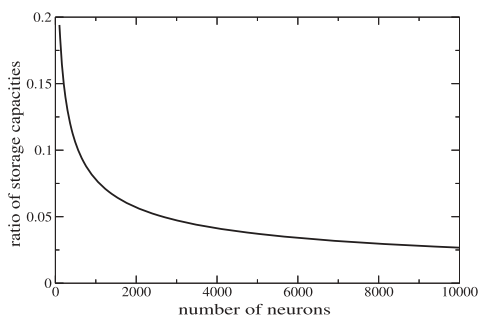
J.M. Cortes, A. Greve, A. Barrett and M.C.W. van Rossum. Dynamics and Robustness of Familiarity Memory. Neural Computation 22: 448-466, 2010 [pdf] When presented with an item or a face, one might have a sense of recognition without the ability to recall when or where the stimulus has been encountered before. This sense of recognition is called familiarity memory. Following previous computational studies of familiarity memory, we investigate the dynamical […]